



























![1+1 FREE | FineSlice™ - Cuts What Scissors Can’t [Offer Ends Today]](http://quanolo.com/cdn/shop/files/d210079baefb8baec1578f1fec4170f982c0ff80d45b958c27cedc5cde9018c7-500.gif?crop=center&height=475&v=1745786035&width=475)







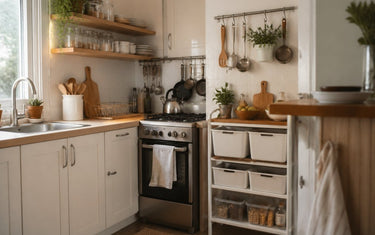
Table of Contents
- Why Small Kitchens Feel Smaller Than They Are
- Step 1: Declutter Countertops Before You Buy Anything
- Step 2: Map Your Workflow to Cut Wasted Steps
- Step 3: Use Vertical Storage to Double Your Cabinet Space
- Step 4: Small Kitchen Storage Hacks That Cost Under £25
- Step 5: Choose Useful Kitchen Gadgets for Small Spaces
- Step 6: Build Habits That Keep the Kitchen Tidy
- Make Your Tiny Kitchen Work for You
- Frequently Asked Questions
Last Updated: September 9, 2026
Why Small Kitchens Feel Smaller Than They Are
A tiny kitchen isn't small because of its square footage; it feels cramped because of poor spatial efficiency and visual clutter. When every surface holds an appliance, a jar, or a stray utensil, the room closes in around you, regardless of its actual dimensions. The remedy isn't buying more storage; it's a systematic approach to how to organize a tiny kitchen effectively, starting with what you keep visible.
Most guides jump straight to product recommendations. That approach fails because it treats symptoms rather than the root cause. Workflow and decluttering matter more than any gadget. Below, we will walk through a six-step system that prioritises non-permanent, renter-friendly solutions and habit-building, so your kitchen stays tidy long after the initial reset.
Step 1: Declutter Countertops Before You Buy Anything
The first step in learning how to organize a tiny kitchen effectively is removing everything from your countertops that does not serve a daily function. Countertop real estate is the most valuable space you own, and every item left out costs you both visual calm and usable prep area. Pull everything off the surfaces, group items into "daily use," "weekly use," and "rarely used," and relocate the last two categories into cabinets or donate them.
A common mistake is decluttering once and then letting items creep back within a fortnight. To prevent this, apply the one-touch rule: anything you have not touched in two weeks does not belong on the counter. For the items that remain, ask whether they can be mounted on walls or stored vertically. This step alone often recovers a third of the usable workspace in a small kitchen (the NIH).
Step 2: Map Your Workflow to Cut Wasted Steps
Once surfaces are clear, the next step is to arrange your kitchen around your actual cooking sequence, a principle often called the "kitchen triangle." This concept connects your three most-used zones: food storage, food preparation, and cooking. When these zones are positioned logically, you minimise wasted movement and make food preparation feel effortless, which is the ergonomic foundation of how to organize a tiny kitchen effectively.
Draw a simple map of your kitchen and trace where you chop, where you cook, and where you store dry goods. Position your knives and cutting board between the sink and the hob, place pans near the heat source, and keep oils and spices within arm's reach of where you cook. If you are renting, you cannot move cabinets, but you can change what lives inside them. The goal is accessibility: the items you reach for most should sit at waist height, not buried in a low cupboard.
Step 3: Use Vertical Storage to Double Your Cabinet Space
Vertical storage is the single most effective strategy for small kitchens because it exploits the empty air between shelves and the unused wall space above counters. Cabinet interiors rarely use their full height, and installing shelf risers or stackable bins lets you double the storage capacity of a single cupboard. On walls, magnetic strips for knives and spice tins free up drawer space while keeping tools visible.
For renters, the key is choosing non-permanent solutions that do not require drilling. Strong adhesive hooks, tension rods, and over-the-door racks can be removed without leaving marks, making them ideal for flats where landlord approval is limited. A tension rod placed vertically inside a cabinet can hold baking trays and chopping boards on their sides, converting dead space into accessible storage. This approach to small kitchen storage hacks turns wasted inches into functional room.
Step 4: Small Kitchen Storage Hacks That Cost Under £25
You do not need a full renovation to transform a tiny kitchen; several effective small kitchen storage hacks cost less than £25 and install in minutes. These budget-friendly fixes target dead space that most people overlook, such as the back of cabinet doors, the gap beside the fridge, and the underside of shelves. A magnetic strip mounted inside a cupboard door holds spice tins, while an under-shelf basket adds instant storage for mugs or small packets.
| Hack | Approximate Cost | Best Use | Installation Time |
|---|---|---|---|
| Tension rod (vertical) | £8-£12 | Baking trays, chopping boards | 2 minutes |
| Adhesive hooks | £5-£10 | Utensils, mugs, measuring cups | 1 minute each |
| Under-shelf basket | £10-£15 | Mugs, small jars, cling film | 3 minutes |
| Magnetic strip | £12-£20 | Knives, spice tins | 5 minutes |
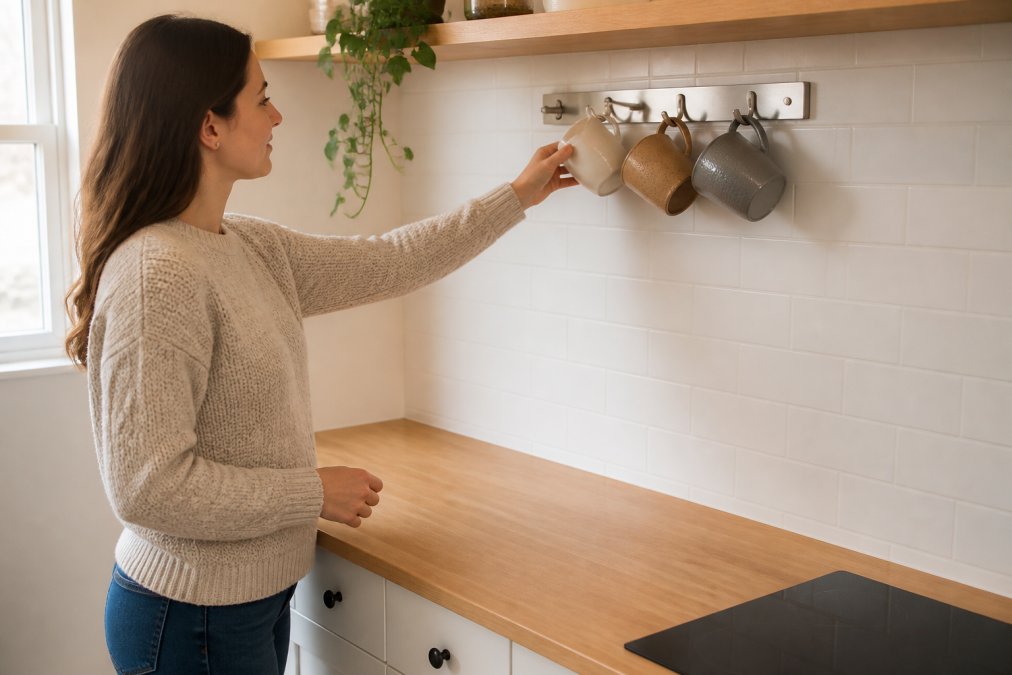
A standout solution for cluttered counters is the CozyNest™ Magnetic Space-Saving Mug Holder Organizer at £64.95, which gives mugs a dedicated wall home. For those wanting to keep oil bottles and spices within reach without sacrificing surface space, the OrderlyNest™ Kitchen Wall Shelf Organizer at £54.95 offers a sturdy, reinforced shelf that mounts cleanly to the wall. Both require no drilling, making them suitable for rental kitchens where you cannot make permanent alterations.
Step 5: Choose Useful Kitchen Gadgets for Small Spaces
Selecting useful kitchen gadgets for small spaces requires a different mindset than buying for a large kitchen: every item must earn its place by serving multiple functions or solving a specific spatial problem. Before purchasing anything, ask whether it duplicates a tool you already own and whether it will be used weekly. Gadgets that fail this test end up in a drawer, which is precisely the clutter you are trying to eliminate.
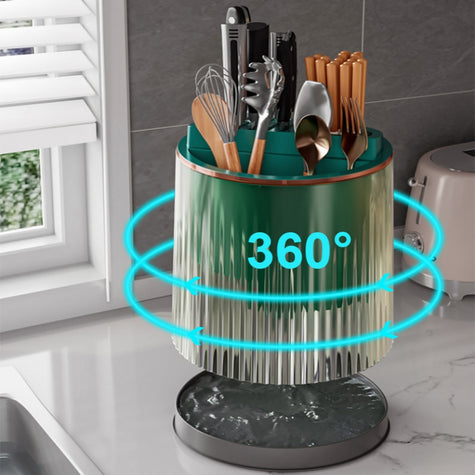
The most effective tools for compact kitchens are those that improve accessibility within existing storage. A swivel shelf, for example, turns a deep corner cabinet from a black hole into a usable space where every bottle and can is reachable. The SwivelMax™ Swivel Storage Shelf at £24.97 uses high-quality ball bearings for effortless 360-degree rotation, providing impressive storage capacity for bottles and cans of all sizes. It is an ideal solution for the deep cupboards that plague small kitchens.

For drawers that have become junk bins, the ClariDraw™ Wall-Mounted Drawer Organizer at £59.00 applies the same no-drill philosophy to drawer interiors. Its strong adhesive backing means no tools are required, transforming any drawer into a tidy haven for cutlery and utensils. When choosing between DIY solutions and store-bought organisers, consider that quality materials and reliable adhesives can last longer and protect your walls and drawers from damage.
Step 6: Build Habits That Keep the Kitchen Tidy
Organisation is not a one-time event; it is a maintenance routine that requires small, consistent habits to prevent clutter from returning. The most effective habit is the "reset ritual": spending five minutes each evening returning every item to its designated home. This single practice keeps countertops clear and ensures the kitchen is ready for the next day's food preparation.
A second habit is the "one-in, one-out" rule for kitchen gadgets and cookware. When you acquire a new item, commit to removing an existing one, which prevents the slow accumulation that overwhelms small spaces. Finally, schedule a monthly ten-minute review of your pantry and cabinets to reorganise anything that has shifted and to discard expired goods. These habits are the difference between a kitchen that stays organised and one that needs reorganising every few months.
Make Your Tiny Kitchen Work for You
The challenge of a small kitchen is not a lack of storage; it is the absence of a coherent system for using the space you have. By decluttering countertops, mapping your workflow, exploiting vertical storage, and choosing multi-functional gadgets, you can create a kitchen that is both calm and efficient. The strategies above prioritise non-permanent, renter-friendly solutions that respect both your walls and your budget.
Organising a tiny kitchen effectively comes down to consistent habits and choosing tools that genuinely earn their place. At Quanolo, we curate practical solutions designed to simplify daily routines, from the CozyNest™ Magnetic Mug Holder that clears your counters to the SwivelMax™ Shelf that tames deep cupboards. With a 4.8 out of 5 average rating from over 29,000 households served, our range is built to solve the household annoyances that make small-space living harder than it needs to be. Shop now and give your tiny kitchen the order it deserves.
Frequently Asked Questions
What is the most effective way to organize a tiny kitchen on a budget?
Start by decluttering countertops and grouping items you use weekly. Then add tension rods, adhesive hooks, and stackable bins, most of which cost under £15. Prioritize vertical storage inside cabinets using shelf risers or under-shelf baskets. A SwivelMax™ Swivel Storage Shelf (£24.97) uses dead corner space efficiently for bottles and cans. You do not need a full renovation, just clear zones for prep, cooking, and cleaning.
How do you store pots and pans in a tiny kitchen without taking up cabinet space?
Store pots and pans vertically rather than stacking them. A wall-mounted rack or pegboard keeps heavy items off shelves and within reach. If drilling is not an option, use an over-the-door rack on the inside of a pantry or utility cupboard. For lids, use a tension rod vertically between shelves to slot them upright, which stops the pile from toppling and frees up flat space.
What are the best useful kitchen gadgets for small spaces that actually get used?
The gadgets that earn their place solve one specific problem without adding clutter. A ClariDraw™ Wall-Mounted Drawer Organizer (£59.00) attaches without drilling and keeps utensils visible. The CozyNest™ Magnetic Mug Holder (£64.95) clears counter space by storing mugs under a shelf. Choose multi-functional tools you will reach for daily, not single-use items that sit in a drawer.