


Table of Contents
- Identify Whether Your Floor or Furniture Is the Problem
- How to Stop Table Wobble with Immediate Fixes
- Tighten Loose Joints and Hardware
- Best Furniture Levelling Tools for the Job
- Material-Specific Repair Approaches
- Protect Your Flooring While Stabilising Furniture
- When to Use Self-Stabilizing Furniture Technology
- Frequently Asked Questions
Last Updated: September 28, 2026
Identify Whether Your Floor or Furniture Is the Problem
The first step to fix wobbly furniture is determining whether the floor or furniture is the problem, since the solution differs completely.
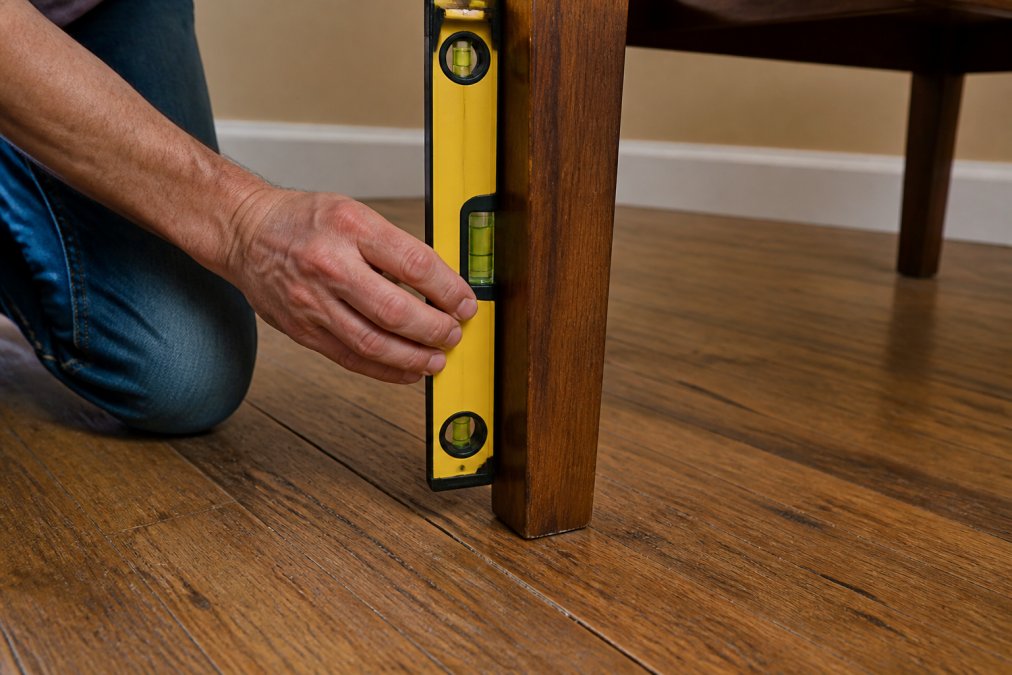
Testing for surface variance
Place a spirit level on your floor where the furniture sits. If the bubble drifts, your floor is uneven. Significant deviation means the floor is the culprit.
Test multiple spots, floors aren't uniformly uneven, and this reveals where to focus stabilization.
Checking furniture legs and joints
Set the furniture on a perfectly flat surface, like a concrete garage floor or a level tile. If it still wobbles, the problem is the furniture itself, not your floor.
Measure each leg from floor to furniture underside at all corners. Unequal lengths are common in older pieces.
Wiggle legs gently, if they move independently, joints have loosened. Gaps where legs meet the body signal failed glue or loose screws.
How to Stop Table Wobble with Immediate Fixes
Once you've identified the problem, you can apply a quick fix. These solutions work best for minor wobbles and uneven floors. They won't solve structural damage, but they'll stabilize furniture enough for daily use.
Using felt pads and rubber spacers
Felt pads slide under furniture legs, protect flooring, and install in minutes.
Clean each leg's underside with a dry cloth to remove dust and debris, which prevent adhesive from sticking.
Choose felt pads that cover the leg width completely. Peel backing and press firmly for 10 seconds to set adhesive.
Rubber spacers offer height adjustment for floor slope. Stack multiple if needed, but don't exceed 2 centimetres, steeper angles are unstable.
Applying shims under furniture legs
Shims are thin wedges that slip under legs to compensate for uneven floors and work for temporary or permanent solutions.
Insert a shim under the leg needing lift, test for wobble, and add more if needed until the leg contacts solidly.
Use wooden shims for wooden furniture (less visible) and rubber or plastic shims for metal furniture (won't scratch).
Secure shims with wood glue or construction adhesive to prevent sliding. Allow full curing before use.
Tighten Loose Joints and Hardware
Loose joints and fasteners are the most common cause of wobbly furniture. Tightening them often solves the problem completely.
Securing dowel holes and screw points
Dowels are wooden pegs reinforcing joints. Loosened dowels cause joint separation and wobble even on level floors.
Inspect joints where legs meet the frame for gaps or movement. Tap gently with a rubber mallet, solid joints feel rigid.
If dowels are loose, remove and reglue them (if the hole is tight) or replace with a slightly larger dowel (if the hole has enlarged).
Check each screw with the appropriate screwdriver type and tighten methodically around the furniture.
Turn screws clockwise until snug, then a quarter turn more, don't overtighten or you'll strip threads or crack wood.
Using wood glue for structural integrity
Wood glue creates a permanent bond stronger than wood itself, ideal for repairing loose joints.
Disassemble the joint carefully and clean away old glue with a chisel or scraper, dried glue prevents new bonding.
Apply fresh wood glue to coat all surfaces, reassemble, and clamp tightly for 24 hours.
For furniture you can't disassemble, inject wood glue using a syringe applicator and clamp for 24 hours.
Best Furniture Levelling Tools for the Job
Having the right tools makes furniture stabilization faster and more effective. These are the essentials for any household.
Rubber mallet and adjustment techniques
A rubber mallet won't damage wood or metal and is essential for helping you fix wobbly furniture by tapping shims into place and adjusting joints.
Tap lightly with controlled force, multiple light taps work better than one hard strike.
Tap from the side rather than straight down to prevent damage and feel when the leg is positioned correctly.
Levelling equipment and precision tools
Choose a spirit level at least 60 centimetres long for accuracy, shorter levels give false readings on sloped surfaces.
A measuring tape checks leg lengths precisely, even 3-millimetre differences create noticeable wobble.
A rubber mallet, wood glue, shims, felt pads, and spirit level form the core toolkit and solve most wobble problems. Quanolo's curated range includes practical levelling solutions designed for exactly these repairs, helping you handle common furniture issues.
Material-Specific Repair Approaches
Different materials require different techniques, what works for wood can crack antiques or strip metal threads.
Wooden furniture: dowels, grain direction, and glue selection
Wooden furniture wobbles when dowels loosen or glue fails. Dowels are cylindrical pegs (8-12 mm diameter) reinforcing leg-frame joints.
Loose dowels separate joints by millimetres, creating wobble. Wiggle the leg, if it moves independently, the dowel joint has failed.
If the hole is tight, remove the dowel, clean old glue, apply fresh wood glue, reinsert, and clamp for 24 hours.
If the hole has enlarged, replace the dowel with one 1-2 mm larger, drill out slightly, glue in place, and trim flush.
If severely enlarged, fill with a dowel plug, then drill a new hole at an offset location for a fresh dowel.
For screw-based joints, tighten every screw with the correct type until snug, then a quarter turn more, no further.
Wooden legs may split along the grain from humidity changes. Inject glue into splits, clamp, and allow 24 hours curing. Don't attempt this on antique or valuable pieces without professional advice.
Metal furniture: bolts, rivets, and corrosion
Metal frames use bolts, rivets, or welds. Loose bolts cause wobble and are easy to fix; loose rivets and cracked welds need professionals.
Inspect every bolt and tighten clockwise with the correct wrench size. Check every 6 months if moved frequently, as vibration loosens bolts.
Loose rivets must be drilled out and replaced with bolts. If uncomfortable drilling metal, a local metalworker can do this for £15-40 per rivet.
For corroded bolts, apply penetrating oil and wait 15-30 minutes. If stuck, heat gently with a heat gun. Clean with a wire brush, apply anti-seize compound, and reinstall.
Cracked welds require professional re-welding. Furniture with cracked welds is unsafe and should be replaced or professionally repaired.
Upholstered furniture: frame access and hidden damage
Upholstered furniture wobbles when the frame is loose. The challenge is accessing the frame without damaging upholstery.
Check the underside for a dust cover, a thin fabric panel stapled to the frame. Peel it back to access frame joints and look for bolts, screws, or dowels.
Tighten bolts or screws. For loose dowels, inject glue with a syringe applicator and clamp for 24 hours.
If held with staples or tacks, wobble usually indicates weakened or split frame wood. This requires professional upholstery repair.
For sofas, check legs separately. Tighten visible screws. If loose with no fasteners, inject glue around the base and clamp for 24 hours.
Glass and stone furniture: structural limitations
Wobble in glass furniture usually comes from a loose frame or pedestal, not the glass.
Protect Your Flooring While Stabilising Furniture
Furniture legs damage different floor types differently. Your stabilization method must account for these risks to avoid costly repairs.
Flooring-type-specific protection strategies
Hardwood and engineered wood floors are vulnerable to scratches and indentation. Felt pads are essential, choose at least 12 mm thick to distribute weight and reduce friction.
Invisible repair methods: aesthetic considerations
Many users want invisible stabilization. Visible shims and pads look untidy in formal spaces or under glass tables.
Long-term protection and maintenance
Inspect felt pads and rubber spacers every 12 months and replace if worn, compressed, or discoloured.
When to Use Self-Stabilizing Furniture Technology
Modern furniture sometimes includes self-levelling feet or adjustable legs that compensate for uneven floors without shims or spacers.
Frequently Asked Questions
What is the best way to fix wobbly furniture on uneven floors?
Start by identifying whether the problem is the floor or the furniture using a spirit level. If the floor is uneven, use felt pads, rubber spacers, or shims under the furniture legs to compensate for the surface variance. For furniture issues, tighten loose joints, apply wood glue to dowel holes, and secure all fasteners. Combining these approaches, addressing both the furniture's structural integrity and the floor's irregularities, provides the most durable fix.
Can I use household items to stop furniture from wobbling?
Yes, several household items work temporarily. Folded cardboard, cork coasters, or rubber washers can act as shims under furniture legs. Felt pads from old furniture or adhesive-backed craft felt create a buffer on hard floors. For minor adjustments, a rubber mallet helps tap legs into alignment. However, these are short-term solutions; proper felt pads, spacers, or structural repairs with wood glue provide lasting stability and protect your flooring.
How do best furniture levelling tools differ from basic fixes?
Basic fixes like felt pads compensate for uneven floors but don't address structural problems. Levelling tools, spirit levels, adjustable feet, and precision shims, can help you diagnose and correct alignment. A rubber mallet allows controlled adjustments without damaging furniture or floors. For load-bearing furniture or antique pieces, these tools can help ensure proper weight distribution and prevent long-term damage to both the furniture and your flooring.
Is it safe to use wood glue and fasteners on rented furniture?
Wood glue and screw tightening are non-invasive repairs suitable for renters. They stabilize existing joints without requiring landlord approval. Avoid permanent modifications like drilling new holes. Instead, use adhesive-backed felt pads, rubber spacers, and shims, all removable solutions that don't damage floors or furniture. These methods allow renters to stabilize wobbly pieces while maintaining the property in its original condition.