


Table of Contents
- Why Minimalist Kitchen Tools Matter
- Essential vs. Optional: Defining Your Kitchen Inventory
- Useful Kitchen Gadgets for Small Spaces
- Minimalist Kitchen Essentials List
- How to Declutter Kitchen Utensils
- Multi-Purpose Tools: The Core of Minimalist Efficiency
- The Psychological and Practical Benefits
- Frequently Asked Questions
Last Updated: September 21, 2026
Why Minimalist Kitchen Tools Matter
A cluttered kitchen drawer packed with single-use gadgets makes cooking harder: you waste time searching for tools, space storing rarely-used items, and money replacing broken gadgets instead of investing in durable ones.
Minimalist kitchen tools eliminate this waste. Fewer, better tools that handle multiple jobs reduce stress, speed meal prep, lower replacement costs, and eliminate friction from daily cooking.
This shift is about efficiency, not deprivation. A sharp chef's knife replaces six specialty blades. A quality cutting board handles vegetables, meat, and bread. Multi-purpose tools reduce clutter, simplify storage, and make cooking more enjoyable.
Essential vs. Optional: Defining Your Kitchen Inventory
Start by separating what you actually use from what you think you should use. Essential tools are those you reach for weekly. Optional tools handle one specific task brilliantly but nothing else.
Essential tools, chef's knife, cutting board, mixing bowl, wooden spoon, measuring cups, and saucepan, handle roughly 80% of all cooking tasks. Everything else builds on this foundation.
Optional tools like garlic presses, citrus juicers, and spiralisers are useful for specific dishes but not necessary. Problems arise when optional tools outnumber essentials, turning your kitchen into a gadget museum.
Track what you use for one week. Tools you didn't touch? Remove them. Tools you reached for daily? Your essentials. This reveals personal cooking patterns generic lists can't capture.
Useful Kitchen Gadgets for Small Spaces
Small spaces demand ruthless prioritisation. Every tool must earn its place through versatility or frequent use, making multi-purpose design critical.
The best gadgets for compact kitchens handle multiple jobs. A microplane grater replaces a box grater, zester, and nutmeg grinder. A Y-shaped peeler works on potatoes, carrots, and herbs. A wooden spoon handles stirring, scraping, and serving.
Storage solutions matter equally: wall-mounted magnetic strips hold knives, vertical holders use wall space, and hanging hooks keep frequent tools accessible.
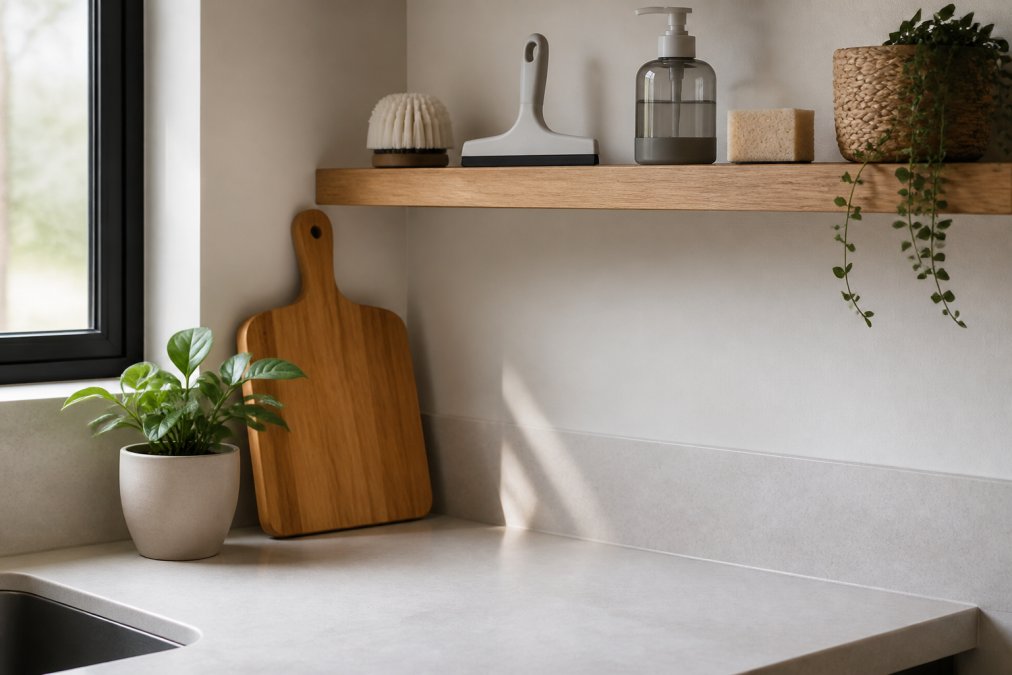
For tight quarters, consider nesting or collapsible tools: stacking bowls, measuring spoons on a ring, and collapsible colanders.
Quanolo's range includes tools designed for compact kitchens, prioritising multi-purpose functionality. The Soap Dispenser With Palm Brush Holder combines dishwashing and counter cleaning without separate storage.

Minimalist Kitchen Essentials List
Cutting and Prep:
- One quality chef's knife (a blade of approximately 20cm handles most tasks)
- One paring knife for delicate work
- One cutting board with proper drainage
- One wooden spoon for stirring and scraping
Cooking:
- One stainless steel or cast iron saucepan (3-4 litre capacity)
- One frying pan with heat-resistant handle
- One mixing bowl suitable for both prep and serving
- One set of measuring cups and spoons
Cleaning:
- One reliable sponge or cloth for daily washing
- One scrubbing brush for stubborn residue
- One drying cloth
This core set handles everyday cooking. Add only what your cooking style demands: bakers add rolling pins, entertainers add serving platters, pasta makers add colanders.
A simplified kitchen feels calmer. You move faster knowing where everything is and spend less replacing tools because you've invested in quality essentials.
How to Declutter Kitchen Utensils
Start by removing everything from one drawer or cabinet and laying it out. This visual inventory forces you to confront how much you actually own.
Sort items into three categories: use regularly, use occasionally, and never use. If you haven't used something in six months, donate or sell it.
Before discarding, evaluate repairability. A wooden spoon with a loose handle can be re-glued. Cast iron with rust can be restored. A dull knife can be sharpened. Tools built to last require maintenance, that's part of the minimalist commitment. Tools with fused plastic handles, non-replaceable parts, or non-refinishable materials should go first; they're designed for disposal, not longevity.
Soap Dispenser With Palm Brush Holder →
Ask three questions: (1) Can it be repaired? Look for solid construction with replaceable handles, re-sharpenable metal, and re-glueable joints. (2) Am I willing to maintain it? Cast iron needs seasoning, carbon steel needs oiling, wood needs conditioning. Be realistic. (3) Does the material age well? Stainless steel, cast iron, and solid wood improve with age. Plastic yellows and cracks. Choose proven durable materials.
For occasionally-used items, store them separately from your daily tools. A high shelf, a back-of-cabinet box, or a separate drawer keeps them accessible without cluttering your main workspace. This separation is crucial, it keeps your everyday cooking environment clear whilst preserving tools for specific occasions.
Next, examine duplicates ruthlessly. Do you really need three wooden spoons? Two cutting boards? Multiple spatulas? Keep one high-quality version of each and remove the rest. Duplicates create decision fatigue and waste storage space. But when choosing which duplicate to keep, select the one with the best construction and repairability, not the newest or most aesthetically pleasing.
Finally, document what you're keeping and why. A simple list, "chef's knife (20cm blade, German steel, sharpens easily), wooden spoon (solid beech, 30 years old, re-wrapped handle twice), cast iron pan (inherited, requires seasoning)", creates accountability. It reminds you why each tool earned its place and what maintenance it needs. This documentation also prevents the slow creep of new gadgets back into your kitchen, because you've explicitly defined your system.
Multi-Purpose Tools: The Core of Minimalist Efficiency
Multi-purpose tools are the foundation of minimalist kitchen design. They handle several tasks equally well, eliminating the need for specialists that sit unused most of the time. This approach reduces clutter, simplifies decision-making, and improves cooking efficiency.
A chef's knife is the classic multi-purpose tool. It minces, slices, dices, and chops. It handles herbs, vegetables, meat, and bread. One quality knife replaces a paring knife, boning knife, bread knife, and cleaver for most home cooks. The trade-off is learning proper technique for different cuts, but that skill transfer improves your cooking overall.
Wooden spoons are equally versatile. They stir hot liquids without conducting heat, scrape pan bottoms without scratching non-stick surfaces, and serve finished dishes. They work in every cookware type and last for years with basic care.
For cleaning, multi-purpose tools matter just as much. The Corner And Joint Cleaning Brush handles kitchen counters, bathroom corners, and window frames with equal effectiveness. The Tile Brush And Squeegee Cleaner 4-in-1 Multiuse Tool combines grout cleaning, tile scrubbing, and surface drying in one ergonomic handle.


The key to selecting multi-purpose tools is testing them across your actual cooking patterns. A tool that's genuinely useful across multiple tasks reduces your total toolkit. A tool that's "okay" at several things but excellent at none creates frustration and eventually gets replaced.
The Psychological and Practical Benefits
The shift toward minimalist kitchen tools delivers benefits that extend far beyond organisation. There's a measurable psychological impact when your cooking space is uncluttered and intentional, rooted in how your brain processes decision-making and environmental stimuli.
Reduced Cognitive Load and Decision Fatigue
Every object in your kitchen is a micro-decision. When you open a drawer with twelve spatulas, you're choosing which one to use. When your countertop holds a garlic press, citrus juicer, and spiraliser, you're deciding whether to use them or reach for a knife instead. These tiny decisions accumulate throughout the day, consuming mental energy that could go toward actual cooking or enjoying the process.
This is called decision fatigue, and it's measurable. Research into environmental psychology shows that visual clutter increases cortisol levels (the stress hormone) and reduces focus (pubmed.ncbi.nlm.nih.gov). A minimalist kitchen with five essential tools instead of thirty optional ones eliminates dozens of these micro-decisions daily. You open a drawer, you see your chef's knife, your paring knife, and your wooden spoon. The choice is obvious.
Improved Cooking Flow and Confidence
Financial Benefits with Psychological Reinforcement
Environmental and Ethical Alignment
The Compound Effect Over Time
Frequently Asked Questions
What are the must-haves for a minimalist kitchen?
A minimalist kitchen essentials list should include a sharp knife, cutting board, mixing bowl, one good pan, wooden spoon, and basic cleaning tools. The key is selecting high-quality, durable items that serve multiple purposes. Multi-functional tools like a 4-in-1 tile brush or a soap dispenser with integrated scrubber reduce the number of separate items you need. Focus on tools that handle your most frequent cooking and cleaning tasks rather than accumulating single-use gadgets.
How do you decide which kitchen gadgets to keep?
Audit your kitchen by using each tool once a week for a month. If you don't reach for it, it's taking up valuable space. Ask yourself: Does this perform a task I do regularly? Can another tool do the same job? Does it improve my cooking workflow or just look nice? Prioritise items made from durable materials like stainless steel or cast iron that last years rather than cheap gadgets that break easily. This approach helps you build a truly functional minimalist kitchen essentials list.
What are the benefits of owning fewer kitchen utensils?
Fewer utensils mean less clutter on counters and in drawers, making your kitchen feel larger and more organised. You spend less time searching for tools and cleaning them. Quality over quantity means you invest in durable, high-performance items that perform better than cheap alternatives. A simplified kitchen also reduces decision fatigue when cooking, allowing you to focus on food preparation rather than managing gadget overload. Maintenance becomes simpler too, since fewer tools mean less wear and tear across your collection.
Are minimalist kitchens more efficient for home cooks?
Yes. A minimalist approach to kitchen tools improves your workflow by eliminating distractions and reducing time spent searching for equipment. Multi-functional tools like the Soap Dispenser With Palm Brush Holder at £29.95 combine soap dispensing with scrubbing, cutting down on the number of items you need. When your kitchen contains only tools you actually use, you develop faster, more intuitive cooking habits. Many home cooks find that constraints actually boost creativity and efficiency in food preparation.