


Table of Contents
- Identify Your Wood Finish Before Starting
- Removing White Water Rings from Wood
- How to Fix Heat Marks on Wooden Tables
- DIY Wood Stain Removal Tools and Materials
- Sanding and Refinishing for Severe Water Damage
- Common Mistakes to Avoid When Removing Water Stains
- How to Remove Water Stains from Wooden Tables: Safety Precautions
- Frequently Asked Questions
Last Updated: September 24, 2026
Identify Your Wood Finish Before Starting
Before you remove water stains wood, identify your wood finish and substrate type. Different finishes and materials react differently to moisture, heat, and removal methods, and some techniques can cause irreversible damage.
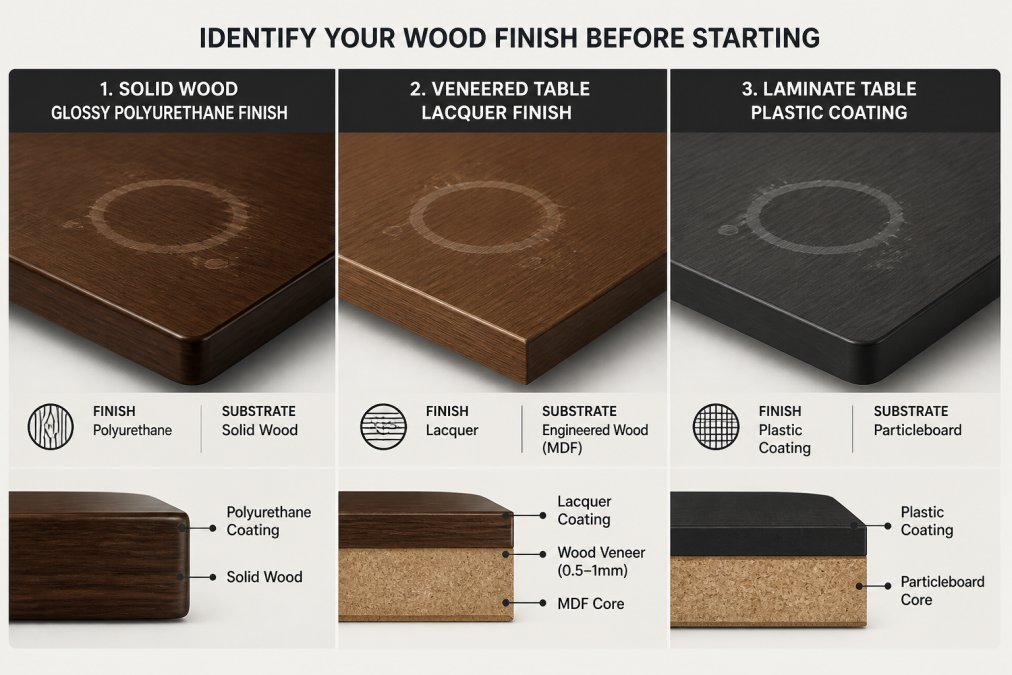
Wood Finish Types and Their Vulnerabilities
Surface finishes (varnish, lacquer, polyurethane) sit on top of the wood. Penetrating finishes (oil, wax) soak into the grain. Identifying which protects your table determines which removal method is safe.
Surface finishes:
- Lacquer: Vulnerable to heat above 60°C. Heat and vinegar methods are safe; sanding is effective but requires care.
- Polyurethane: Durable and heat-tolerant. Most household methods are safe; abrasives work well.
- Varnish: Heat-resistant. Responds well to gentle abrasives and vinegar solutions.
Penetrating finishes:
- Oil (tung, linseed, Danish oil): Water stains penetrate the wood itself. Sanding may be necessary.
- Wax: Soft and easily damaged by heat and abrasives. Responds best to gentle methods; heat can melt wax finishes entirely.
Substrate Type: Solid Wood, Veneer, and Laminate
The substrate beneath the finish is equally critical. Veneer and laminate respond very differently to moisture, heat, and abrasives than solid wood.
Solid wood:
- Can tolerate heat, moisture, and abrasive methods
- Sanding and refinishing are viable options
- Most household removal methods are safe
Veneer: Never use heat (risk of delamination). Minimise moisture. Use only gentle abrasives (baking soda, toothpaste) with light pressure. Do not sand.
Laminate: Never use heat. Avoid excess moisture. Use only soft cloths and gentle methods. Do not sand; damage is permanent.
How to Identify Your Finish and Substrate
Finish identification: Rub water on an inconspicuous area, surface finishes bead up; penetrating finishes absorb it. Check the underside for labels. Lacquer and polyurethane are glossy; oil and wax are matte.
Substrate identification: Examine the table edge, solid wood shows continuous grain; veneer shows a thin layer over different material; laminate shows plastic coating.
Stain Depth: Finish vs. Wood
White rings form when moisture is trapped in the finish layer. Dark stains on oil finishes mean moisture has penetrated the wood grain. This distinction determines which technique to use.
- Stains in the finish layer only: Light-coloured rings, often white or cloudy. These respond to heat, vinegar, and gentle abrasives. No sanding required.
- Stains in the wood grain: Dark rings or discolouration that doesn't fade when dry. These have penetrated past the finish. Gentle methods may not work; sanding may be necessary.
Removing White Water Rings from Wood
To remove water stains wood, understand that white water rings form when moisture is trapped under a surface finish. They're usually surface-level and respond well to simple treatments without sanding.
Method 1: Heat and Towel Technique
Heat causes trapped moisture to evaporate through the finish.
Steps:
- Place a clean, dry microfiber cloth over the white ring
- Set a clothes iron to low heat (around 120-130°C)
- Press the iron gently onto the cloth for 10-15 seconds
- Lift the cloth and check the ring
- Repeat if needed, but do not leave the iron in one spot too long
- Allow the table to cool completely before touching the area
Use gentle, brief heat only. Never place the iron directly on wood.
Method 2: Vinegar and Water Solution
A mixture of distilled white vinegar and water lifts white water rings without harsh chemicals.
Steps:
- Mix equal parts distilled white vinegar and water in a spray bottle
- Spray the solution lightly onto a soft cloth (not directly onto the wood)
- Wipe the affected area gently in the direction of the wood grain
- Dry immediately with a clean, dry cloth
- Buff with a microfiber cloth to restore shine
Method 3: Baking Soda Paste
Baking soda acts as a gentle abrasive to remove surface stains without scratching the finish.
Steps:
- Mix baking soda with a small amount of water to form a thick paste
- Apply the paste directly to the white ring with a soft cloth
- Rub gently in circular motions for 30-60 seconds
- Wipe away the paste with a damp cloth
- Dry the area completely with a clean cloth
- Buff with a microfiber cloth
Method 4: Toothpaste as an Abrasive
Non-gel white toothpaste contains mild abrasives that polish away light water rings.
Double-Sided Cleaning Sponge →
Steps:
- Apply a small amount of white toothpaste to a soft cloth
- Rub the affected area gently in the direction of the wood grain
- Use light pressure and circular motions
- Wipe away toothpaste residue with a damp cloth
- Dry thoroughly and buff with a microfiber cloth
Method 5: Mayonnaise or Oil-Based Treatment
Oil-based products like mayonnaise help lift moisture from beneath the finish.
Steps:
- Apply a thin layer of mayonnaise directly to the white ring
- Let it sit for 5-10 minutes
- Wipe away the mayonnaise with a clean cloth
- Buff the area with a microfiber cloth to remove any residue
- Repeat if necessary
How to Fix Heat Marks on Wooden Tables
Heat marks appear as dark rings where hot objects have damaged the finish. Unlike white rings, heat marks penetrate the finish layer and are more stubborn.
DIY Wood Stain Removal Tools and Materials
Most effective tools and materials for removing water stains are already in your home.
Common household materials:
- Distilled white vinegar
- Baking soda
- White toothpaste (non-gel)
- Mayonnaise or cooking oil
- Water
Sanding and Refinishing for Severe Water Damage
When water stains have penetrated deep into the wood grain or heat damage has scorched the surface, sanding becomes necessary. This method removes the damaged finish layer and the affected wood surface, then allows you to refinish.
Common Mistakes to Avoid When Removing Water Stains
Most damage comes from rushing or using the wrong technique. Understanding what not to do prevents new problems.
Preventable Mistakes During Treatment
Mistake 1: Using excessive heat, High temperatures blister or melt finishes. Always use low heat and test first. Heat is particularly dangerous on veneered or laminate surfaces.
Troubleshooting: What to Do If You Made It Worse
If you've created new water marks: Allow the table to dry completely for 24-48 hours. New marks often fade as moisture evaporates. If persistent, treat as a new stain.
When to Stop and Seek Professional Help
If any of the following apply, further DIY attempts risk permanent damage:
- Veneer has lifted or separated from its substrate
- The finish has blistered, cracked, or peeled extensively
- Laminate is cracked, peeling, or has visible substrate damage
- The stain has worsened despite multiple treatment attempts
- You're unsure whether your table is solid wood, veneer, or laminate
- The table is antique, valuable, or has a specialty finish
Professional furniture repair specialists can assess damage accurately and restore finishes without risking further harm. The cost of professional repair is often less than the cost of replacing a damaged table.
How to Remove Water Stains from Wooden Tables: Safety Precautions
Ventilation: Open windows when using vinegar or solutions to prevent fume buildup.
Skin protection: Wear gloves if you have sensitive skin.
Eye safety: Avoid splashing vinegar solution near your eyes.
Frequently Asked Questions
How can I remove old water stains from a wood table?
Old water stains respond best to the heat and towel method or a baking soda paste, depending on how deeply the moisture has penetrated the finish. Start with the gentlest method first, heat application using a cloth and iron on low setting. If that doesn't work, progress to baking soda paste or vinegar solution. For stubborn stains trapped in the wood grain, you may need light sanding with fine-grit sandpaper followed by a protective coating like wood wax or penetrating oil to restore the surface.
Does mayonnaise really remove water stains from wood?
Yes, mayonnaise can work on surface moisture stains because the oil content helps displace trapped water from the wood grain. Apply a thin layer directly to the watermark, let it sit for 10-15 minutes, then buff with a soft microfiber cloth. This method works best on lacquer or varnish finishes where the stain hasn't penetrated deeply. For best results, test on an inconspicuous area first to ensure the oil doesn't darken the wood or affect the finish.
How do I know if a water stain has damaged the wood finish?
White rings indicate trapped moisture in the finish itself, while dark stains suggest the water has penetrated through to the wood surface beneath. Run your finger over the mark, if it feels rough or the finish is raised, the damage is structural and requires sanding. If the stain is purely discolouration on a smooth finish, it's likely surface-level moisture that can be removed with gentler methods. Dark stains that don't respond to any treatment method may indicate permanent damage requiring refinishing.
What DIY wood stain removal tools do I actually need at home?
You need a microfiber cloth, distilled white vinegar, baking soda, white toothpaste, and an iron or heat source for most common water stains. For tougher marks, keep fine-grit sandpaper (220-400 grit) and a wood conditioner or penetrating oil on hand. A damp cloth for application and a soft-bristled brush help apply pastes evenly. The Quanolo Double-Sided Cleaning Sponge (£29.95) provides both a microfiber side for gentle buffing and a scraper side for dried paste removal, making it ideal for wood restoration work.