


Table of Contents
- Why Pet Food Containers Fail to Seal
- How Gasket Fatigue Causes Seal Failure
- Material Degradation: Plastic, Metal, and Glass
- Environmental Factors: Heat, Light, and Humidity
- How to Keep Dry Dog Food Fresh
- Signs of Rancid Pet Food and Spoilage Detection
- Best Airtight Pet Food Storage Containers
- Testing Your Container's Airtightness
- Frequently Asked Questions
Last Updated: September 19, 2026
Why Pet Food Containers Fail to Seal
Pet food containers fail seal because the materials and mechanisms that create an airtight barrier degrade over time. The rubber gasket compresses, plastic warps, and metal components corrode, each failure mode undermines the seal's structural integrity. Understanding why this happens isn't just academic. It directly affects whether your pet's food stays fresh or becomes rancid within weeks.
Environmental stress, material fatigue, and chemical degradation work together to compromise even well-built containers. Some fail within months while others last years, depending on storage conditions and exposure to heat, humidity, and repeated opening cycles.
Heat exposure, humidity fluctuations, and repeated opening cycles all accelerate how pet food containers fail seal. Understanding these mechanics helps you choose better storage solutions and extend container life.
How Gasket Fatigue Causes Seal Failure
The gasket is the rubber or silicone ring that creates an airtight seal when the lid closes. Over time, this component experiences what engineers call gasket fatigue. The material loses its elasticity, compression force weakens, and microscopic gaps form where air can enter.
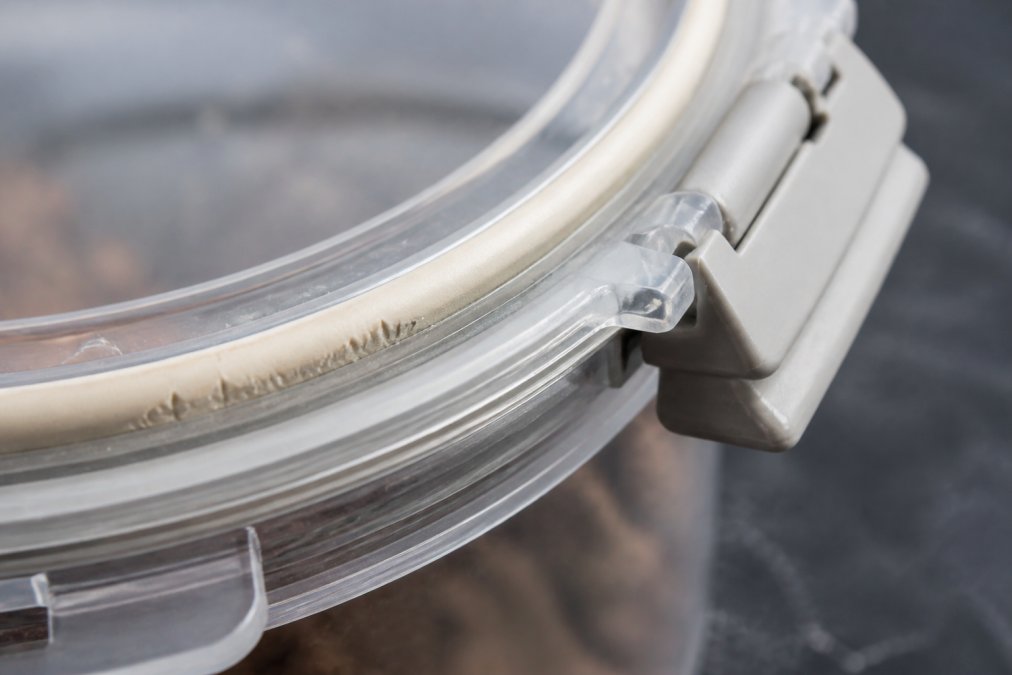
Gasket fatigue occurs because the rubber is compressed and decompressed with each opening. After hundreds of cycles, the material doesn't bounce back fully. Compression set, permanent deformation, increases progressively, turning a perfect seal into a loose, unreliable one.
Temperature fluctuations accelerate this process. Thermal cycling causes the rubber to harden and lose flexibility. A gasket that performs well at room temperature may fail completely after temperature swings of 15°C or more.
Poor-quality latches don't apply uniform pressure across the gasket. Uneven compression causes heavily compressed sections to harden while lightly compressed sections remain soft, leading to pinhole leaks at the weakest points.
Material Degradation: Plastic, Metal, and Glass
Different container materials degrade in different ways, but all are vulnerable to environmental stress. Understanding which material fails first helps you choose containers that maintain their seal longer.
Polypropylene, the standard plastic used in pet food containers, becomes brittle over time. UV exposure triggers photodegradation, causing the plastic to warp and crack, preventing the lid from seating properly. Even without direct sunlight, plastic hardens as volatile compounds evaporate.
Steel and aluminium corrode when exposed to moisture and condensation inside the container. Rust weakens the metal, making latches less effective and causing the lid to sit unevenly. Galvanised coatings slow this process but don't prevent it entirely.
Glass containers avoid warping and corrosion, making them durable for long-term storage. However, microscopic chips or scratches on the rim prevent a complete seal. Glass is also heavier and more fragile, limiting practical use in busy households.
The gasket-to-container interface is where seal failure actually begins. Plastic can leach chemicals that soften rubber, metal corrosion products can degrade gasket material, and manufacturing imperfections cause uneven gasket compression.
Environmental Factors: Heat, Light, and Humidity
Where you store your pet food container matters as much as the container itself. Heat, light, and humidity are the three environmental stressors that guarantee seal failure if containers are exposed to them regularly.
High temperatures soften gasket material and increase thermal stress on plastic. A container stored above a radiator or near the oven fails much faster than one in a cool pantry. Even moderate heat (above 21°C) noticeably shortens gasket life.
UV radiation degrades plastic and rubber simultaneously. Storing containers on open shelves or near windows accelerates photodegradation. Keeping containers in a dark cupboard or pantry extends their functional life considerably.
Humidity fluctuations create pressure changes inside the sealed container. If the seal isn't perfect, air enters during cooling cycles, introducing oxygen and moisture that degrade kibble and promote mycotoxin development.
The combination of these factors is worse than any single stressor. A container in a warm, humid kitchen near a window will fail dramatically faster than one in a cool, dark, dry pantry. Storage location is often the difference between a container that fails in six months and one that lasts two years.
How to Keep Dry Dog Food Fresh
Maintaining freshness requires both proper storage and regular monitoring of your container's seal. Start by choosing the right location: a cool, dark, dry place like a cupboard or pantry is ideal. Avoid kitchens, laundry rooms, or areas near heat sources.
Transfer kibble only if the original bag is intact. The original bag's multilayer material provides superior oxygen exclusion compared to most household containers. If you must transfer, do so immediately after opening.
Keep the container's lid clean and dry. Food particles or moisture on the gasket surface prevent a proper seal. Wipe the rim and gasket with a dry cloth before closing the lid each time. This simple habit prevents contamination and ensures the gasket seats correctly.
Minimise opening frequency. Consider using a smaller scoop container for daily portions and opening the main storage container only once weekly to reduce cumulative stress on the gasket and latch mechanism.
Check the seal regularly by pressing down on the lid. It should feel firm and resistant. If it feels loose or spongy, replace the container before the seal fails completely.
Store in a consistent temperature environment. Avoid moving containers between warm and cold spaces. Thermal cycling accelerates gasket fatigue and creates pressure changes that allow air infiltration. If you keep backup bags in a garage or shed, bring them indoors a few hours before opening so condensation doesn't form inside the container.
Signs of Rancid Pet Food and Spoilage Detection
Rancid kibble develops a distinctive musty or sour smell from lipid peroxidation. If kibble smells off, don't feed it to your pet. Rancid fat can cause digestive upset and, in severe cases, pancreatitis.
Look for discolouration (oxidation), clumping (moisture ingress), or visible mould (mycotoxin contamination). Mouldy kibble is unsafe and must be discarded immediately.
Check for an oily or sticky coating on individual pieces. This indicates fat oxidation has progressed significantly. The kibble may still be edible in early stages, but it's nutritionally degraded and tastes rancid to your pet.
Taste testing is not recommended, but you can assess freshness by breaking open a piece of kibble. Fresh kibble snaps cleanly. Stale kibble crumbles or feels soft. This simple test reveals whether moisture has penetrated the container.
Pay attention to your pet's behaviour when eating. If your pet refuses food that's normally eaten eagerly, the kibble may be rancid even if it doesn't smell obviously off to you. Pets often detect spoilage before humans do.
Keep track of when you opened each container. Kibble remains fresh for 2-4 weeks in a properly sealed container, depending on storage conditions. After a month, even in a sealed container, oxidation begins to noticeably affect flavour and nutritional value. Rotate stock regularly and use older containers first.
| Storage Condition | Expected Freshness | Primary Risk |
|---|---|---|
| Cool, dark, dry, sealed | 4 weeks | Slow oxidation |
| Warm kitchen, sealed | 2-3 weeks | Accelerated oxidation |
| Humid environment, sealed | 2-3 weeks | Moisture ingress, mould |
| Partially sealed or loose | 1 week | Rapid oxidation, rancidity |
| Opened bag, no container | 3-5 days | Rapid oxidation, insects |
Best Airtight Pet Food Storage Containers
An effective storage container must maintain an airtight seal, resist environmental stress, and be practical for daily use. The best containers balance these requirements.
Glass containers with silicone gaskets offer the most durable seal over time. The rigid glass prevents warping, the gasket remains compressible, and the combination resists environmental degradation. However, glass is heavy and breaks easily, which limits its practicality in households with children or pets that knock things over.
Stainless steel containers with rubber gaskets provide excellent durability and environmental resistance. Steel doesn't warp, corrode resistance is superior to plastic, and the smooth interior prevents food particles from damaging the gasket. These containers are heavier than plastic but lighter than glass, and they're less likely to break.
High-quality plastic containers with thick walls and precision-moulded gaskets can maintain a seal for 1-2 years if stored properly.
Testing Your Container's Airtightness
Before relying on a container to keep kibble fresh, test its actual airtightness. Simple tests reveal whether the seal is truly effective.
Frequently Asked Questions
Why do pet food containers fail to seal even when new?
New containers can fail to seal due to manufacturing defects in the gasket, improper latch alignment, or material inconsistencies in the lid. The seal's effectiveness depends on consistent compression of the rubber gasket against the container rim. If the gasket is misaligned during assembly or the latch mechanism doesn't apply even pressure, air gaps form immediately. Additionally, some plastic containers warp slightly during manufacturing or transport, preventing a flush fit between lid and rim. Always test the seal before use by pressing the lid firmly and checking for resistance.
How can you tell if a pet food container is truly airtight?
Test airtightness using the water displacement method: fill the container with water, seal it, and turn it upside down over a sink. If water leaks, the seal is compromised. For dry food, listen for a hissing sound when opening the lid, this indicates a vacuum seal. You can also apply gentle pressure to the sealed container; it should feel firm and resist compression. Check the gasket visually for cracks, hardening, or flattening. Replace containers that show visible wear or fail these simple tests, as they cannot maintain the air exclusion needed to prevent oxidation and rancid fats.
What are the signs of rancid pet food?
Rancid pet food develops a sour, musty, or off smell, often described as cardboard-like or fishy. Kibble may appear darker or duller than fresh food, and the texture becomes brittle or oily to the touch due to lipid peroxidation. Mold growth appears as visible spots or discolouration, particularly in corners or near the lid. Some pets refuse rancid food outright. These signs indicate oxidation and moisture ingress, both caused by seal failure. Discard affected food immediately, as rancid fats and mycotoxins can cause digestive upset or toxicity in pets.
Does keeping the original bag inside a container help preserve dry dog food?
Yes, storing dry dog food in its original bag inside an airtight container provides a secondary moisture barrier and oxygen exclusion layer. The original bag is designed with a metallised film that blocks light and reduces oxygen permeation. However, the original bag alone is not airtight once opened, it relies on rolling or folding the top, which leaves air pockets. Combining the original bag with a rigid airtight container maximises shelf life by reducing thermal expansion effects and preventing pinhole leaks that rigid containers alone might develop over time. This dual-layer approach is particularly effective for kibble stored longer than 3-4 weeks.