


Table of Contents
- Why Small Apartments Need a Different Approach to Comfort
- Small Apartment Lighting Ideas That Create Warmth
- Clever Storage Solutions for Small Spaces
- How to Add Texture to a Room Without Clutter
- Colour and Warmth: Building an Inviting Atmosphere
- Scent, Sound, and the Often-Forgotten Senses
- Making It Work on a Budget: DIY Hacks for Renters
- Frequently Asked Questions
Last Updated: September 19, 2026
Why Small Apartments Need a Different Approach to Comfort
Learning how to make a small apartment feel cozy requires a completely different strategy than furnishing a larger home. Space constraints mean every design choice has to earn its place. The challenge isn't decoration, it's creating warmth without overwhelming the room. A small apartment that feels cluttered reads as cramped and stressful, not inviting. But one that's thoughtfully layered with texture, light, and purpose becomes a sanctuary.
This guide covers the strategies that actually work for making a small apartment feel cozy, focusing on intentional choices about light, storage, and sensory experience.
Small Apartment Lighting Ideas That Create Warmth
Lighting transforms a small space faster than anything else. A single overhead light creates harsh shadows and makes rooms feel institutional. Layered lighting, combining multiple sources at different levels, builds an inviting atmosphere.
Understand colour temperature and warmth
Colour temperature, measured in Kelvin (K), directly affects how cosy a space feels. Warm white light (2700K-3000K) mimics candlelight and creates the inviting atmosphere you're after. Cool white (4000K-5000K) feels clinical and institutional, avoid this in small apartments.
Most overhead ceiling lights default to 4000K or higher. Replacing these with warm white bulbs (2700K) costs a few pounds and transforms the entire room. LED bulbs in warm white are now standard and energy-efficient, so there's no trade-off between comfort and running costs.
Layer your light sources at different heights
Ambient lighting forms your foundation, soft, general light that fills the room without creating shadows. Pair it with task lighting (a reading lamp beside your chair) and accent lighting (a small light highlighting a plant or artwork). Together, these three layers create depth and prevent the 'cave' feeling small spaces can develop.
Wall-mounted sconces work brilliantly because they don't consume floor space and can be positioned at eye level, creating a flattering, warm glow. Position them 150-180 cm from the floor on either side of a mirror or seating area. String lights draped along a shelf add visual warmth without taking up room. Floor lamps with upward-facing shades bounce light off the ceiling, making the room feel taller. The goal is multiple light sources at different heights and intensities, so your eye travels around rather than settling on one bright spot.

Use dimmable lamps for mood control
Harsh, bright light makes small spaces feel smaller and more confined. Dimmable lamps let you adjust brightness to match your mood and the time of day. A lamp that's bright enough for reading at 100% can drop to 30% for evening relaxation, creating two entirely different atmospheres in the same room.
When choosing dimmable fixtures, ensure the bulb and dimmer are compatible. LED bulbs marked 'dimmable' work with standard dimmers; non-dimmable LEDs will flicker or fail. Position dimmable task lighting near seating areas so you can adjust brightness without getting up.
Avoid common lighting mistakes
Don't rely on a single central ceiling light, it creates harsh shadows and leaves corners dark and uninviting. Don't use only bright white or cool-toned bulbs; they feel institutional and cold. Don't place all lights at the same height; this flattens the space visually.
Clever Storage Solutions for Small Spaces
Clutter kills coziness. A small apartment drowning in visible stuff feels stressful, not welcoming. But smart storage means you can keep what you love without the chaos.
Vertical storage and wall-mounted options
Use walls instead of floor space. Floating shelves, wall-mounted cabinets, and pegboards pull storage off the ground and make rooms feel airier. Tall, narrow shelving units draw the eye upward, making ceilings feel higher. Corner shelves capture dead space that's otherwise wasted. Wall hooks for bags, coats, and hats eliminate floor piles.
Multi-functional furniture that doubles as storage
A bed with drawers underneath stores seasonal clothes or extra bedding. A coffee table with shelves holds books and blankets. An ottoman with hidden storage seats guests and stashes throws or pillows.
The [Foldable Storage Organizer(https://quanolo.co.uk/products/foldable-storage-organizer-for-shoes-and-clothing) for Shoes and Clothing | quanolo.co.uk] holds up to 45 kg, stacks for efficiency, and folds flat when you need floor space. The transparent panels let you see what's inside without opening, saving time when searching for something specific.

The Wooden Bedside Table with Drawer keeps essentials within arm's reach while staying compact. Its felt material resists wear, and the multiple pockets hold phones, books, and remotes without visual clutter.
How to Add Texture to a Room Without Clutter
Texture is what makes a space feel cozy rather than cold. It's the difference between a room that looks nice and one you want to sink into.
Soft furnishings and textile layering
Throw blankets, cushions, and rugs add softness without taking up much space. Layer different textures, a chunky knit blanket, smooth linen pillows, a plush rug, and the room instantly feels more inviting. Textiles also absorb sound, which matters in small apartments where noise bounces off hard surfaces.
Choose a colour palette first, then layer textures within it. This prevents the room from looking chaotic. Warm neutrals, cream, soft grey, warm taupe, create a cohesive base that feels intentional.
Natural materials and tactile accents
Wood, linen, wool, and cotton feel warmer than plastic or metal. These materials also age gracefully, developing character rather than looking worn. Wooden shelving, a linen sofa, wool throws, these choices signal comfort and durability.
Small tactile details matter. A woven basket for blankets. A wooden spoon set by the stove. A cork trivet. These tiny touches accumulate into a cohesive, warm aesthetic without requiring major investment.
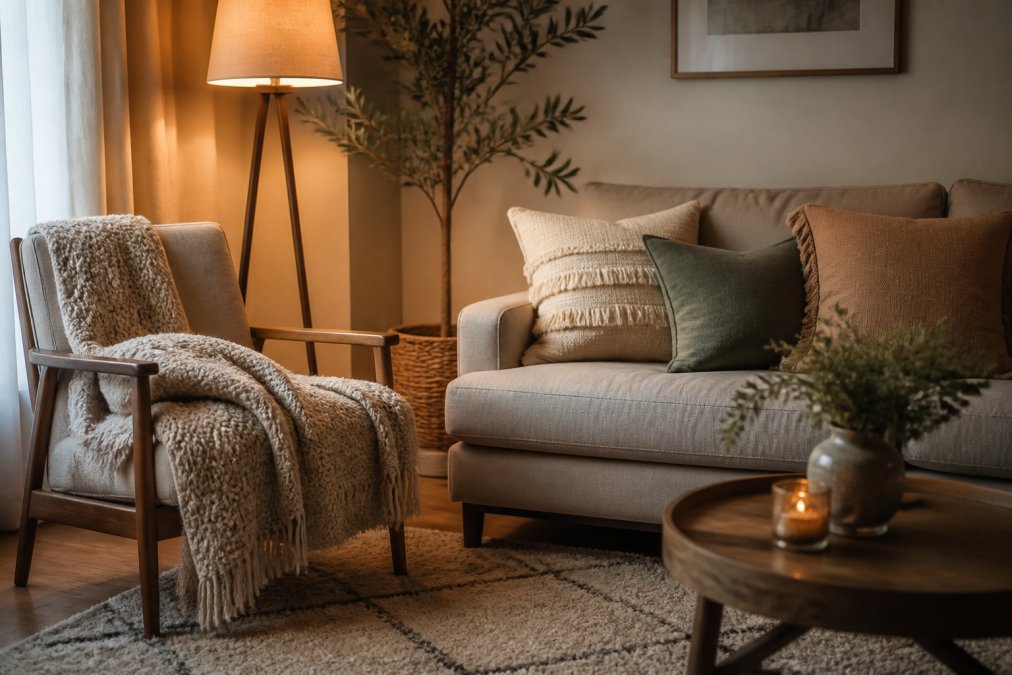
Colour and Warmth: Building an Inviting Atmosphere
Colour sets the emotional tone of a room. Cool greys and whites feel clean but can read as cold in a small space. Warm tones, ochre, terracotta, warm grey, soft browns, make rooms feel embracing.
You don't need bold colour to create warmth. Soft, muted earth tones work better in small apartments than saturated hues. They recede visually, making the space feel larger, while still delivering comfort. Neutral walls paired with warm textiles and wood tones create a cohesive, inviting aesthetic.
Scent, Sound, and the Often-Forgotten Senses
A cosy apartment isn't just visual. Scent and sound matter as much as what you see, yet most small-space guides ignore them entirely. These sensory layers transform a room from 'nice-looking' to genuinely inviting.
Use scent to anchor emotional comfort
Scent is the sense most directly linked to memory and emotion. A familiar fragrance can instantly make a space feel like home, even if you've only just moved in.
Manage sound to reduce anxiety and create calm
Small apartments amplify sound. Hard surfaces bounce noise around, creating an anxious, echoing quality that undermines coziness. Soft furnishings absorb sound and dampen this effect.
Combine scent and sound for multisensory coziness
The most cosy small apartments engage multiple senses simultaneously. Warm lighting + soft textures + a subtle scent + gentle ambient sound create an immersive comfort that visual design alone cannot achieve.
Making It Work on a Budget: DIY Hacks for Renters
You don't need money to make a small apartment cosy. Many of the best tactics cost almost nothing.
Frequently Asked Questions
How can I make my small apartment feel cozy without buying lots of new furniture?
Focus on soft furnishings and lighting adjustments rather than furniture. Add throw blankets, cushions, and warm-toned rugs to create texture and comfort. Introduce layered lighting with dimmable lamps to set a relaxing mood. These changes cost less than new furniture but transform the atmosphere significantly. Decluttering what you already own also makes spaces feel more inviting and spacious.
What are the best small apartment lighting ideas for a cosy feel?
Combine multiple light sources at different levels: ambient ceiling lights, task lighting from desk lamps, and accent lighting from floor lamps or string lights. Dimmable bulbs are essential for controlling mood. Avoid harsh overhead lights alone. A dimmable LED floor lamp with adjustable height lets you direct light where needed to create soft, warm pools of illumination.
How do I add texture to a room in a small space without making it feel cluttered?
Choose a limited colour palette and layer textures within that scheme. Use natural materials like wool, linen, and wood. Layer throw blankets, cushions, and an area rug strategically on existing furniture rather than adding new pieces. A single accent wall or textured wallpaper adds depth without clutter. Quality over quantity is key: select fewer items with interesting textures rather than many small decorative pieces.
What clever storage solutions actually work in tiny flats?
Vertical storage maximises limited floor space: wall-mounted shelves, over-door organisers, and tall narrow cabinets keep items accessible without consuming square metres. Foldable storage containers that stack efficiently, like those with transparent panels, let you see contents while saving space when not in use. Bedside organisers and under-bed storage utilise dead space. Multi-functional furniture such as storage benches or tables with drawers combines practicality with comfort in one piece.
A small apartment can feel cramped or it can feel like a sanctuary. The difference lies in intentional choices about light, storage, texture, and sensory experience. Quanolo's range of storage solutions and lighting options makes it easier to create that warmth without overwhelming your space. Shop now and transform your apartment into a place you genuinely want to spend time.