


Table of Contents
- Why mental stimulation matters for dogs
- How to choose dog puzzle toys that suit your pet
- Difficulty levels and age-appropriate progression
- Durable puzzle toys for aggressive chewers
- Safety considerations and supervised play
- DIY puzzle toy alternatives
- Cleaning, maintenance and getting started
- Frequently Asked Questions
Last Updated: September 26, 2026
Why mental stimulation matters for dogs
Mental stimulation is as essential to a dog's wellbeing as physical exercise. Without adequate cognitive engagement, dogs develop behavioural problems: excessive barking, destructive chewing, anxiety, and aggression.
When dogs solve problems, their brains release dopamine, the same neurochemical that creates satisfaction in humans. This is why interactive puzzle toys for dogs work so well. They transform feeding time into an enrichment activity, keeping your pet engaged and content.
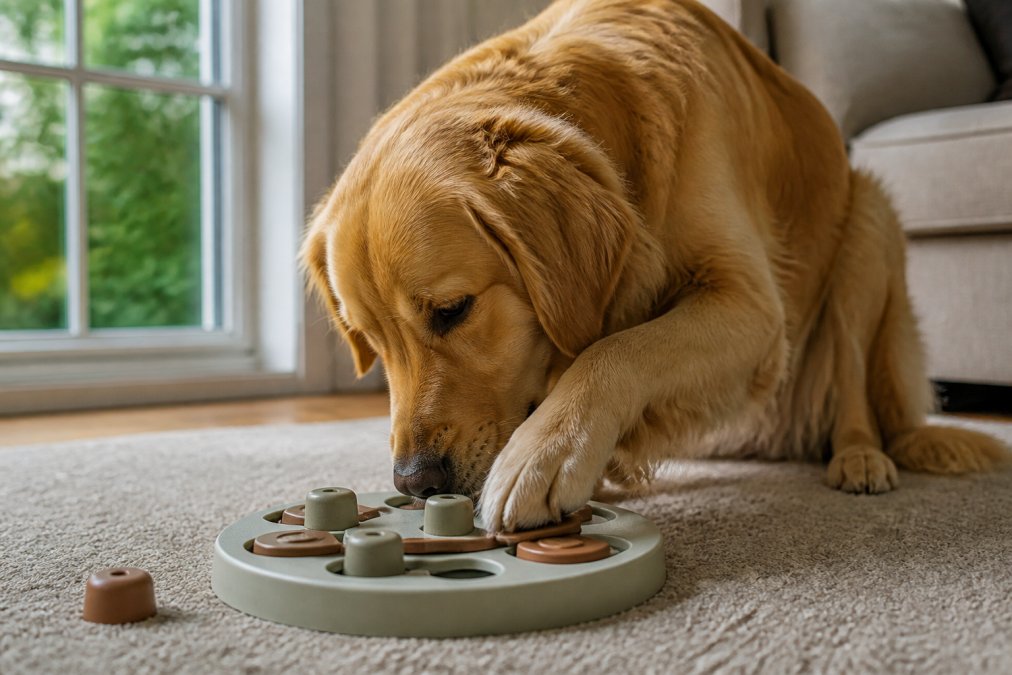
Mental exercise strengthens the bond between you and your dog, builds confidence in anxious dogs, provides outlets for high-energy breeds, slows cognitive decline in seniors, and supports healthy development in puppies.
How to choose dog puzzle toys that suit your pet
Selecting the right puzzle toy depends on your dog's age, size, and chewing intensity.
Assess your dog's play style: food motivation, focus duration, and chewing intensity. These traits determine which interactive puzzle toys for dogs will engage them rather than frustrate them.
Size matters critically, check manufacturer recommendations to prevent choking hazards and ensure your dog can manipulate the toy.
Look for toys made from strong, non-toxic materials like rubber compounds and reinforced plastics. For aggressive chewers, avoid toys with small removable parts.
Choose difficulty that challenges without frustrating, a toy that keeps them engaged for 15-20 minutes.
Difficulty levels and age-appropriate progression
Interactive puzzle toys for dogs work best when matched to your dog's problem-solving ability, with progression matched to their readiness.
Beginner level suits puppies under six months and dogs new to puzzle play. These toys have simple mechanisms: sliding covers, basic compartments, or snuffle mats. Expect sessions of 5-10 minutes maximum, with puzzles solved within 2-3 minutes. Examples include treat-dispensing balls with large openings and simple two-compartment boards.
Intermediate level challenges dogs aged 6-18 months and adults with puzzle experience. Rotating discs, stacking cups, and multi-step dispensers require two or three sequential actions. Most adult dogs thrive here. A dog is ready when they solve beginner toys in 1-2 minutes and actively seek the toy. Sessions last 15-20 minutes.
Advanced level demands sustained focus and sequential problem-solving with multiple manipulations and hidden compartments. High-intelligence breeds and experienced solvers excel here. Dogs are ready when they solve intermediate toys in under 3 minutes and show boredom signs. Advanced puzzles challenge for 15-25 minutes.
Age-specific progression roadmap:
Puppies (8 weeks-6 months): Start with beginner toys featuring large openings. Introduce one toy per week, keep sessions brief, and end before frustration.
Young dogs (6-18 months): Transition to intermediate puzzles as your dog masters beginner toys. Rotate between two or three toys to maintain novelty.
Adult dogs (1-7 years): Most handle intermediate to advanced puzzles. Match toys to their temperament, methodical dogs prefer complex puzzles; impulsive dogs prefer quick-win toys.
Senior dogs (7+ years): Revert to intermediate or beginner puzzles if showing cognitive decline. Favour toys rewarding gentle nudging for arthritic dogs.
Recognising frustration and troubleshooting:
If your dog abandons the toy after 2-3 minutes, the difficulty is too high. Return to the previous level for at least one week to avoid negative associations.
If your dog becomes destructive toward the toy, switch to an easier version and assess whether puzzle play suits their current emotional state.
If your dog solves the puzzle in under two minutes consistently, introduce the next difficulty level gradually alongside a familiar toy.
Durable puzzle toys for aggressive chewers
Aggressive chewers need toys built to survive determined assault. Standard plastic toys splinter and break; heavy-duty materials are essential.
Look for reinforced natural rubber or commercial-grade plastics engineered for powerful jaws. Seams should be reinforced; single-stitched toys fail quickly.
Avoid toys with glued components. Choose toys where every component is permanently bonded or moulded as one piece.
Test the toy's durability yourself before offering it to your dog. Bend it, twist it, apply pressure. If it flexes excessively or shows signs of cracking, it won't survive your dog's attention. Many owners of aggressive chewers find that fewer, higher-quality toys last longer than multiple cheaper alternatives.
Rotation helps extend toy life. Offer one toy for a week, then swap it out. This breaks the cycle of obsessive destruction and keeps your dog interested when the toy reappears.
Safety considerations and supervised play
Safety comes first with any enrichment toy. Never leave your dog unsupervised with a new puzzle toy, especially during the first few sessions. Watch for signs of distress, excessive frustration, or destructive behaviour toward the toy itself.
Check toys regularly for damage. Cracks, loose pieces, and worn seams create choking hazards. Discard toys showing significant wear rather than risking intestinal blockage or choking. This is especially critical for dogs under three years old and senior dogs with compromised health.
Ensure all materials are non-toxic. Food-grade rubber and BPA-free plastics are standard for quality toys, but verify this before purchase. Some cheaper toys contain harmful chemicals that leach into saliva and are ingested over time.
Supervise puzzle play sessions, particularly initially. Some dogs become frustrated and may swallow toy components whole rather than working through them properly. Others become possessive or anxious during puzzle play, signs that the toy isn't suitable for them.
Clean toys regularly. Dried food, saliva, and bacteria accumulate in crevices. Most puzzle toys are dishwasher safe, which simplifies maintenance. Hand-wash toys with warm soapy water weekly, or run them through the dishwasher on a gentle cycle.
DIY puzzle toy alternatives
Commercial toys aren't your only option. DIY puzzle toys cost little and work surprisingly well for many dogs. They also provide variety, which keeps enrichment fresh and interesting.
Muffin tin puzzle: Place treats in a standard muffin tin, then cover each cup with a tennis ball. Your dog must remove the balls to access treats. This works for most dogs and takes 30 seconds to prepare.
Towel roll: Roll treats inside a hand towel, then roll the towel loosely. Your dog unrolls it to find treats. Simple, effective, and uses something you already own.
Toilet paper tube stuffing: Stuff a toilet paper tube with treats, then fold the ends closed. Your dog tears it apart to access the contents. Supervise closely, some dogs swallow cardboard.
PVC pipe puzzle: Drill holes in a PVC pipe, fill it with treats, and cap the ends. Your dog rolls and manipulates it to dispense treats through the holes. This works well for medium to large dogs.
Sock puzzle: Stuff a clean sock with treats, tie it closed, and hide it under blankets or in a box. Your dog searches and excavates to find it. This mimics natural foraging behaviour.
Cardboard box: Crumple paper inside a cardboard box, hide treats throughout, and let your dog tear through it. Supervise to prevent cardboard ingestion.
DIY toys work best for dogs who don't immediately destroy them. They're excellent for introducing puzzle play before investing in commercial toys. However, they require close supervision and aren't suitable for aggressive chewers.
Cleaning, maintenance and getting started
Proper maintenance extends toy life and protects your dog's health, but introducing puzzle toys correctly is equally critical. A poor introduction can create lasting negative associations with enrichment.
Cleaning and maintenance:
Most commercial puzzle toys are dishwasher safe; check the manufacturer's instructions. Place toys on the top rack and use a gentle cycle. Hand-washing works equally well: warm soapy water, a brush to reach crevices, and thorough rinsing. Pay particular attention to compartments where food residue accumulates, dried kibble and saliva create bacterial growth and mould if left uncleaned.
Dry toys completely before offering them to your dog. Moisture trapped in crevices encourages bacterial growth. Air-dry toys on a rack or towel, or use a cloth to dry them manually. Store puzzle toys in a clean, dry place away from direct sunlight, which degrades rubber and plastic over time.
Introduction strategy for reluctant dogs:
For reluctant dogs, try these strategies:
Use higher-value treats: If your dog ignores the puzzle with regular kibble, fill it with something more motivating, small pieces of cooked chicken, cheese, or commercial training treats. Once your dog engages consistently with high-value rewards, gradually transition back to regular kibble.
Your first session:
Tracking progress:
Frequently Asked Questions
What are the best interactive puzzle toys for mental stimulation?
The best interactive puzzle toys for mental stimulation combine treat-dispensing with problem-solving elements that require your dog to work for rewards. Look for toys that offer variable difficulty, non-toxic materials, and durable construction. Snuffle mats, slider puzzles, and treat-dispensing balls all provide cognitive development opportunities. Choose based on your dog's age, chewing strength, and food motivation level.
How do I choose dog puzzle toys that match my dog's abilities?
Start by assessing your dog's experience with enrichment toys. Beginners benefit from simple treat-dispensers or snuffle mats that require minimal problem-solving. Intermediate dogs handle slider puzzles and multi-compartment toys. Advanced dogs tackle complex logic games with multiple steps. Consider your dog's size, jaw strength, and whether they're a gentle explorer or aggressive chewer. Introduce one difficulty level at a time and progress gradually.
Are durable puzzle toys safe for aggressive chewers?
Yes, when chosen correctly. Durable puzzle toys for aggressive chewers should feature chew-resistant rubber, reinforced seams, and no small detachable parts. Always supervise play initially to monitor for damage. Check toys regularly for wear and replace if cracks or splinters appear. Non-toxic materials are essential, as aggressive chewers may ingest small fragments. Rotate toys to prevent obsessive chewing of one toy.
Can puzzle toys help reduce separation anxiety and destructive behaviour?
Yes. Puzzle toys provide independent play opportunities and mental engagement that can reduce boredom-related destructive behaviour. By channelling problem-solving instincts and offering positive reinforcement through treat rewards, they help redirect energy away from furniture and belongings. For separation anxiety, use puzzle toys as part of a broader routine that builds confidence. Start with short absences paired with engaging toys to create positive associations.